There’s a special kind of panic that hits at 11 PM when your switchboard trips, your hot water goes cold, and your house smells faintly like burnt plastic. You’ve got no power to half the property, you’re googling “urgent electrician Sydney” with your phone torch on, and every result looks exactly the same — generic, faceless, suspiciously cheap or suspiciously expensive.
Sound familiar? You’re not alone.
Sydney homeowners call electricians hundreds of thousands of times a year. But most people have no idea what they’re actually paying for, what questions to ask, or why the bloke who did your neighbour’s power points is not the same kind of sparky you need when cables go underground. This guide unpacks all of it — the what, the why, the how much, and how to get it done right the first time.
Why Your Choice of Electrician in Sydney Actually Matters
Let’s not dance around it: electrical work done wrong kills people. It also invalidates home insurance, fails building inspections, and costs significantly more to fix down the track.
Sydney has hundreds of licensed sparkies operating across the metro area — from Parramatta to Penrith, Bondi to Blacktown. But “licensed” alone doesn’t tell you much. There are different tiers of electrical work, and not all electricians are qualified to do all of it.
That’s the first thing most people don’t know: there’s a meaningful difference between a general electrician and a Level 2 ASP (Accredited Service Provider) electrician — and getting the wrong one for the wrong job can leave you legally exposed and literally powerless.
If you’re dealing with anything that connects your property to the main power network — think underground cable installation, consumer mains replacement, new connections for a granny flat or new build, or smart meter upgrades — you legally must use a Level 2 ASP. A standard electrician, no matter how experienced, simply isn’t authorised for that work under NSW law.
More on that shortly. First, let’s talk about what most Sydney homeowners are actually dealing with day to day.
The Most Common Electrical Repair Services Sydney Households Need
- Switchboard Repairs and Upgrades
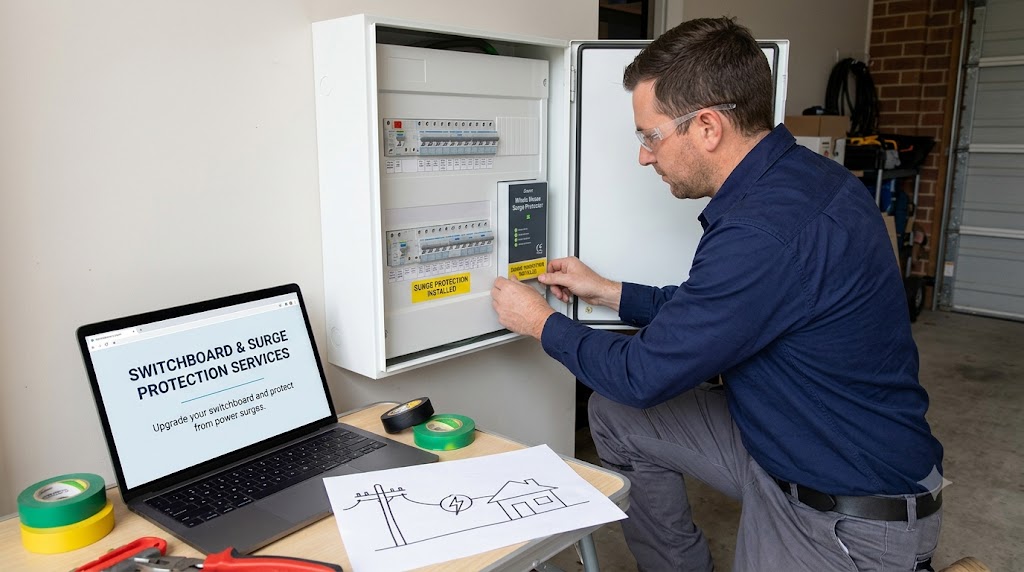
Your switchboard is the brain of your home’s electrical system. Older properties — particularly anything built before the 1990s — often have outdated boards that can’t handle modern electrical loads. Aircon units, EV chargers, induction cooktops: all of them push older switchboards to the edge.
Signs your switchboard needs attention:
- Circuit breakers tripping regularly
- Visible signs of heat or discolouration
- Old ceramic fuses (not safety switches)
- You’re planning a renovation or adding a new appliance
A switchboard upgrade in Sydney typically runs between $800 and $2,500 depending on the size of your home and the complexity involved. It’s not cheap — but it’s a lot cheaper than a house fire.
- Safety Switch Installation
NSW Fair Trading requires safety switches (RCDs) on power circuits and lighting circuits for all new installations. Plenty of older homes are still running without them. A safety switch can cut power in as little as 0.03 seconds when it detects a fault — fast enough to stop electrocution.
If your home doesn’t have safety switches on every circuit, that’s a job worth prioritising. Installation is relatively straightforward for a qualified electrician and usually costs between $150 and $400 depending on how many circuits need coverage.
- Power Point and Lighting Repairs
The bread and butter of residential electrical repair services in Sydney. Dead power points, flickering lights, ceiling fan installations, LED downlight upgrades — these are the everyday jobs that keep local sparkies busy.
LED upgrades in particular are worth doing: quality LEDs use up to 75% less energy than older halogen downlights and last far longer. Many Sydney homeowners are still running old halogens simply because no one’s pointed out the upgrade path.
When You Need a Level 2 Electrician in Sydney — Not Just Any Sparky
Here’s where it gets important. If your project involves any of the following, you’re in Level 2 ASP territory:
- Underground cable installation for a new property connection or an existing property being converted from overhead to underground supply
- Overhead power line work — repairs after storm damage, relocating supply, replacing consumer mains
- New electricity connections for granny flats, secondary dwellings, or new builds
- Smart meter upgrades and meter box relocations
- Three-phase power upgrades that require network interaction
A Level 2 ASP electrician in Sydney is accredited by the network distributor (Ausgrid or Endeavour Energy, depending on your area) and is the only tradesperson legally authorised to carry out these works under the NSW Electricity Supply Act.
Underground Cable Installation Sydney: What’s Actually Involved?
Burying your power supply underground isn’t just about aesthetics (though removing that droopy cable from the street pole does look a hell of a lot better). Underground systems are more resilient to storm damage, safer from accidental contact, and often required by council for newer developments in Sydney’s CBD and certain suburbs.
The process involves:
- Site assessment — determining the safest route and confirming no existing services (gas, water, comms cables) are in the path
- Trenching — excavation to the required depth, typically 600mm for residential supply cables under driveways or pathways
- Conduit installation — heavy-duty PVC or similar conduit to protect the cable
- Cable laying — using approved XLPE insulated cables rated for direct burial
- Backfilling and reinstatement — the trench is filled, compacted, and the surface restored
- Connection and energisation — this final step must be coordinated with the network distributor and only carried out by a Level 2 ASP
Costs for underground cable installation in Sydney vary considerably based on distance and site conditions, but a typical residential job runs from $2,000 to $6,000+. Get a written quote before any work starts.
Hot Water System Repairs and Installation: The Electrician’s Role
Here’s one that confuses a lot of Sydney homeowners: why does my hot water system need an electrician?
Electric hot water systems — whether storage tanks or heat pumps — involve direct wiring to your main switchboard. Installing, replacing, or repairing one isn’t a plumber-only job. It legally requires a licensed electrician for the electrical connection work.
Some of the most common hot water electrical issues include:
- Element failure — the heating element inside an electric storage system burns out (usually after 8–12 years)
- Thermostat faults — when the system heats water either too much or not at all
- Wiring degradation — older systems with deteriorated connections pose fire and shock risks
- Tariff changeover wiring — if you’re switching to off-peak tariff hot water, the wiring needs to be set up correctly
When your hot water goes cold unexpectedly, it’s genuinely urgent — especially in winter. A qualified hot water electrician in Sydney can diagnose and repair most common faults same day, or advise on replacement when the system has reached the end of its serviceable life.
A new electric hot water system installation (labour only) typically costs $250 to $600 for the electrical work, with the unit itself ranging from $400 for a basic storage system to $2,500+ for a heat pump.
What Does an Affordable Electrician in Sydney Actually Cost in 2026?
Let’s be direct about pricing, because vague answers help no one.
Standard residential work:
- Hourly rate: $90–$130/hour
- Call-out fee: $80–$170 (sometimes included in the first hour)
- Minimum charge: Usually 1 hour even for a 20-minute job
After-hours and emergency electrical work:
- Emergency call-out fee: $150–$300+
- After-hours hourly rate: $150–$200/hour (5pm–midnight)
- Overnight (midnight–7am): $200–$300+/hour
Common job costs:
- Safety switch installation: $150–$400
- Power point installation: $80–$200 per point
- Switchboard upgrade: $800–$2,500
- LED downlight retrofit (per light): $50–$150
- Underground cable installation: $2,000–$6,000+
“Affordable” doesn’t have to mean cheap and risky. It means transparent pricing, no hidden call-out fee surprises, and a sparky who explains what they’re doing and why. Always ask for a written quote before work begins, and verify your electrician’s licence at NSW Fair Trading before booking.
Browse the full range of electrical services available in Sydney to get a better sense of what each job involves.
When You Need an Emergency Electrician in Sydney — Right Now
Some electrical problems genuinely cannot wait until morning. Here’s how to tell the difference between “call now” and “book for next week”:
Call an urgent electrician immediately if:
- You can smell burning from a switchboard, outlet, or appliance
- You’ve lost power to your whole property (and it’s not a network outage affecting your street)
- An outlet, switch or appliance has sparked or given you a shock
- You can see scorch marks or discolouration around electrical fittings
- Water has gotten into your switchboard or electrical fittings
Can wait for a business-hours booking:
- A single power point that’s stopped working
- A light fitting that needs replacing
- Planned upgrades and new installations
A good 24/7 emergency electrician in Sydney will give you an honest assessment over the phone and tell you if it’s something that can wait safely until morning — saving you the after-hours premium. Any sparky who immediately insists on an emergency call-out for something minor deserves a second opinion.
How ZAZ Electrical Approaches Electrical Work in Sydney
ZAZ Electrical operates as a full-service electrical contractor across the Sydney metro area, covering everything from everyday residential repairs through to Level 2 ASP network connection work and hot water system installations.
The practical difference with a company like ZAZ is that you’re not calling a general handyman service and hoping they happen to hold the right licence for your specific job. Level 2 work, emergency callouts, hot water electrical installs — these are specialist services, and they’re handled by electricians with the specific accreditations and experience those jobs require.
Here’s what working with a qualified Sydney electrician should look like:
- Clear communication upfront — you describe the problem, they ask the right questions, and they give you an honest indication of what’s involved before anyone shows up at your door
- Written quote before work starts — no verbal estimates that mysteriously expand once the tools are out
- Licensed and insured — verifiable on the NSW Fair Trading licence register
- Clean work, clean site — a professional leaves your property the way they found it (minus the electrical fault)
- Compliance documentation — for any notifiable electrical work, you should receive a Certificate of Compliance for Electrical Work (CCEW)
Serving Homes Across Sydney — From the Inner Suburbs to the Outer West
Whether you’re in the Inner West, the Hills District, the Northern Beaches, the Eastern Suburbs, or Western Sydney, qualified electrical contractors operate right across the metro area. Response times for emergency work and same-day bookings for urgent repairs are realistic for most suburbs.
Check the service areas covered to confirm your suburb is included, and reach out directly if you’re not sure.
The Bottom Line: Don’t Gamble With Your Electrical System
Sydney’s housing stock runs the full spectrum from century-old terraces with original wiring to brand-new builds with three-phase power and EV chargers. Whatever your situation, the basics apply: use licensed electricians, get written quotes, and don’t let anyone talk you into skipping the compliance paperwork.
For specialist work — underground cable installations, new network connections, emergency callouts, or hot water electrical repairs — make sure the person doing the job holds the specific accreditation that work legally requires.
The cost of getting it right the first time is almost always less than the cost of fixing someone else’s shortcuts.
Got an electrical issue that needs sorting? Visit the ZAZ Electrical blog for more guides, or contact the team directly to discuss your job.