Every Sydney homeowner has done it. The lights flicker for half a second; you glance up, shrug, and go back to reheating last night’s dumplings. Nine times out of ten, nothing happens. But that tenth time? That’s the one that ends with a burnt powerpoint, a very confused sparky, and a call-out bill that could’ve been avoided if you’d picked up the phone a week earlier.
Electrical problems have a personality flaw: they’re patient. A loose connection doesn’t announce itself with fireworks on day one — it hums along quietly, getting hotter and grumpier, until one day it isn’t quiet anymore. The tricky part for the average homeowner knows which flickers are “eh, it’s fine” and which ones are “put the popcorn down and call someone now.”
That’s exactly what we’re unpacking here — with a bit of local knowledge from the team at Zaz Electrical, who’ve spent years pulling apart Sydney switchboards from Parramatta to the Eastern Suburbs and have basically seen it all (including the guy who wired his pergola lights through an extension cord taped to the fence — don’t be that guy).
Why “She’ll Be Right” Doesn’t Apply to Wiring
Aussies love a bit of casual optimism. Dodgy gate hinge? She’ll be right. Wobbly deck chair? Nah, it’ll hold. But electricity doesn’t care about your optimism, and it definitely doesn’t negotiate. Unlike a leaky tap that drips politely until you get around to it, a failing electrical component can go from “mildly annoying” to “structural fire risk” without much warning.
This is where a lot of home electrical issues get mismanaged. People treat symptoms — flip the breaker back on, swap the globe, jiggle the cord — instead of asking why the fault happened in the first place. A safety switch that trips once might be a fluke. A safety switch that trips every time you run the kettle and the toaster together is trying to tell you something, and it’s not “buy a bigger kettle.”
If you’re the sort who likes to understand the full picture before calling anyone, it’s worth browsing the range of electrical services Sydney homeowners typically need — it gives you a decent sense of what’s routine maintenance versus what’s a genuine red flag.
The “Probably Fine, But Keep an Eye On It” Category
Not everything needs an emergency call-out at 11pm. Some issues are worth booking in for a standard appointment rather than panicking:
- A single powerpoint that’s stopped working, with no smell, heat, or scorch marks
- One light that keeps blowing globes faster than it should (annoying, but usually a fitting or dimmer compatibility issue)
- Buzzing exhaust fans that still work but sound like they’re auditioning for a horror film
- Old, cracked light switches that are cosmetically tired rather than actively sparking
- A safety inspection or compliance certificate you need for selling, renting, or insurance purposes
These are the kind of jobs where a licensed electrician can pop out within a few days, sort it properly, and you’ve lost nothing by not treating it as a five-alarm fire.
The “Put the Phone Down and Actually Dial” Category
Then there’s the other list. The one where waiting until Monday is a genuinely bad idea. If you’re seeing or smelling any of the following, it’s time to stop scrolling Facebook Marketplace and get onto the emergency electrician Sydney team instead:
- A burning smell near a switchboard, powerpoint, or appliance — this is the electrical equivalent of your body’s “something is very wrong” alarm
- Visible sparks or arcing from an outlet, switch, or the meter box
- A switchboard that’s warm to the touch or making crackling, humming, or ticking sounds
- Total blackout at your property while the neighbours still have power (this points to a fault on your side, not a network outage)
- A safety switch that won’t reset, or keeps tripping no matter what you unplug
- Exposed or damaged wiring, especially after storms, renovations, or a curious pet with strong opinions about skirting boards
- Any sign of electric shock, tingling from taps or metal fittings, or a family member who’s been zapped by an appliance
If there’s an active fire or someone has been shocked and isn’t okay, call 000 first. Everything else on that list is squarely emergency-electrician territory, and honestly, the $200-ish call-out fee is cheap insurance against a house fire.
Not All Sparkies Can Touch the Same Wires
Here’s something a lot of homeowners don’t realise until they actually need it: not every licensed electrician is allowed to work on every part of your electrical system. In NSW, a standard electrician (sometimes called a Level 1) handles everything inside your property boundary — your switchboard, wiring, powerpoints, lighting, the works.
But the moment a fault or job involves the actual connection between your home and the street — think overhead service lines, underground cables, meter upgrades, or reconnecting power after it’s been cut — you need someone with additional accreditation. That’s a Level 2 electrician Sydney authorised professional, and it’s a legal requirement, not just a nice-to-have. Getting an unaccredited tradie to fiddle with network-connected infrastructure isn’t just risky, it’s actually illegal in NSW.
Common Level 2 jobs include:
- New service connections for granny flats, extensions, or knock-down rebuilds
- Underground or overhead cable repairs after storm damage
- Meter box relocations and upgrades
- Disconnections and reconnections at the point of supply
- Powerline faults affecting your specific property
If you’re not sure whether your issue is a Level 1 or Level 2 job, don’t stress about diagnosing it yourself — that’s what the phone call is for.
Hot Water Gone Cold (or Just Gone Weird)
There’s a special kind of betrayal in stepping into a shower expecting warmth and getting an Antarctic surprise instead. Hot water issues aren’t always plumbing problems — a huge chunk of them are electrical, especially with electric storage and continuous-flow systems.
Signs your hot water dramas might have an electrical root cause:
- The unit trips your safety switch every time it kicks in
- You hear buzzing or clicking from the tank before it fails
- The thermostat or heating element has died, leaving you with lukewarm-at-best water
- Your system is drawing power (you can hear or see it running) but producing zero heat
This is genuinely one of those areas where guessing costs you money — plumbers sometimes get called for what’s actually an electrical fault, and vice versa. If your hot water system is acting up, it’s worth getting a proper look from a team that specifically handles hot water system Sydney faults, rather than paying for two separate call-outs to figure out whose problem it actually is.
Things You Really Shouldn’t DIY (Even If YouTube Says Otherwise)
Look, we get it. There’s a certain satisfaction in fixing your own stuff, and Bunnings on a Saturday morning is basically a national pastime. But electrical work sits in a different category to painting a fence or re-hanging a gate. In NSW, unlicensed electrical work isn’t just discouraged — it’s against the law, it can void your home insurance, and it can genuinely kill someone (you, most likely, since you’re the one holding the screwdriver).
Steer clear of DIY-ing:
- Switchboard or safety switch work
- Anything involving the meter box
- New circuits, powerpoints, or wiring
- Ceiling fan or downlight installation (fire risk is higher than people expect)
- Any repair where you’d need to touch exposed wiring
If it’s inside a wall, behind a switch plate, or anywhere near mains power, it’s a job for a licensed electrician — not a rainy-day project.
What Actually Happens When You Call a Professional?
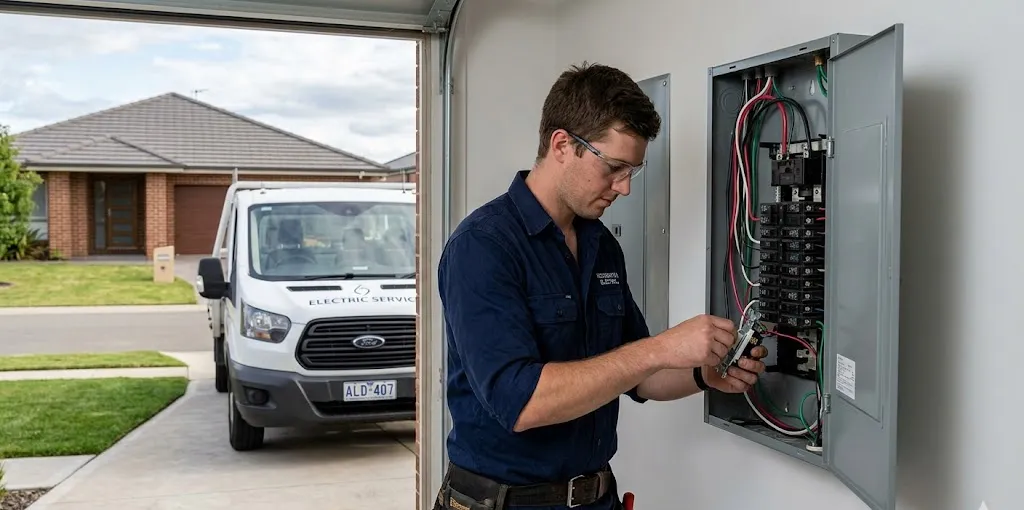
A decent electrician doesn’t just show up, poke at the fuse box, and hope for the best. A proper visit usually looks like this: a chat about what you’ve noticed (sounds, smells, timing — “it happens when the dryer’s on” is genuinely useful info), a visual inspection of the switchboard and affected circuits, testing with proper equipment to isolate the actual fault, and then a clear explanation of what’s wrong and what it’ll cost to fix — before any work starts, not after.
This is standard practice across Zaz Electrical’s work throughout Sydney, whether it’s a quick fault-find or a full switchboard upgrade. No mystery invoices, no upselling you a smart home system when all you needed was a new safety switch.
Sydney-Wide, Not Just the Postcode Next Door
One thing worth checking before you commit to any electrician: do they actually cover your suburb? Sydney’s sprawl means plenty of “local” electricians really only mean local to the Inner West or the Northern Beaches. It’s worth a quick look at the areas covered across Sydney before you book, especially if you’re further out west or down south and don’t want to pay a travel surcharge for someone crossing three bridges to reach you.
The Real Cost of Waiting
Here’s the maths nobody enjoys doing: a $150–$300 call-out now is almost always cheaper than the alternative. Delayed electrical faults tend to snowball — a tripping circuit becomes a damaged appliance, a warm switchboard becomes a full rewire, a “we’ll get to it” attitude becomes an insurance claim nobody wants to file. Electrical problems are one of the rare home maintenance issues where procrastination has compound interest.
FAQs (The Ones People Actually Ask, Not the Obvious Stuff)
My safety switch trips only when it rains — is that actually serious, or just Sydney weather being Sydney weather? It’s serious. A safety switch that trips specifically during wet weather usually means moisture has found its way into an outdoor powerpoint, light fitting, or underground cable, creating a leakage current. It won’t fix itself when the sun comes out — it’ll just wait for the next downpour to remind you.
Can I just reset my switchboard myself if the power goes out, or does that count as “unlicensed work”? Flipping a switch back on isn’t unlicensed work — that’s normal homeowner stuff. The line gets crossed when you start opening the switchboard cover, replacing components, or rewiring anything. If flipping it back on doesn’t hold, or it trips again immediately, stop resetting it repeatedly and get it looked at.
Why did my insurer ask for an electrical compliance certificate before renewing my policy? Insurers are increasingly asking for evidence that a property’s electrical system meets current safety standards, particularly for older homes (pre-1990s wiring is a common flag). A compliance inspection is usually a same-day job and can prevent a claim being knocked back later over an unrelated fault.
Is it normal for a new hot water system to trip the safety switch occasionally during the first few weeks? Not really — a correctly installed unit shouldn’t be tripping your safety switch at all, even in its first month. Occasional trips early on are sometimes written off as “settling in,” but it’s more often a sign of an installation fault or a faulty element that’s only going to get worse.
How do I know if a job needs a Level 2 electrician instead of a regular one? A simple rule of thumb: if the fault or work is on your side of the meter (inside the house, your switchboard, your circuits), a standard electrician handles it. If it involves the actual line running from the street pole or underground pit to your meter, or reconnecting power after a disconnection, that’s Level 2 territory. When in doubt, describe the issue over the phone — a good electrician will tell you honestly if it’s outside their scope.
Do emergency electricians charge more just for showing up out of hours? Generally, yes — after-hours and weekend call-outs typically cost more than a scheduled weekday appointment, which is exactly why it’s worth knowing the difference between “genuinely urgent” and “can wait until Monday” outlined earlier in this guide.
The Bottom Line
Electrical faults rarely improve with time, and Sydney’s mix of heritage terraces, 70s-era apartment blocks, and brand-new builds means the range of issues out there is genuinely huge. The safest approach is simple: know the warning signs, don’t attempt anything past the powerpoint cover, and get a licensed professional in early rather than late.
If something at home has been flickering, buzzing, tripping, or just generally acting suss, it’s worth getting in touch with the team rather than waiting to see if it sorts itself out — it won’t. And if you’re after more practical, no-nonsense advice like this, there’s a growing library of guides over on the Zaz Electrical blog covering everything from switchboard upgrades to smart home wiring.
Because at the end of the day, “she’ll be right” is a great Aussie attitude for footy tipping. It’s a terrible one for wiring.